
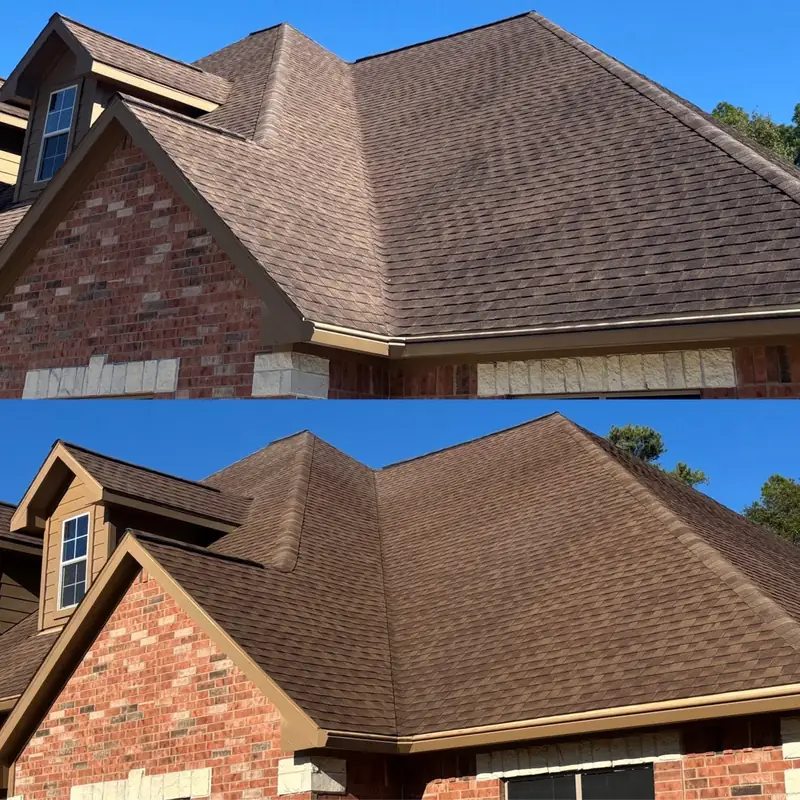
What are the black streaks on a roof?
Black streaks on a roof are colonies of Gloeocapsa magma, a blue-green algae. It feeds on calcium carbonate in the limestone filler of asphalt shingles.
The algae is blue-green when it is alive. It builds a dark protective coating against ultraviolet light, which is what makes the streaks look black. The streaks usually start near the ridge and run down toward the gutters, following the path rainwater takes.
The streaks are not dirt, soot or mold in most cases. Roofing sources such as Mr. Roof and Roof Crafters identify algae as by far the most common cause.
Why do Humble roofs get black streaks?
Humble roofs get black streaks because the local climate gives the algae everything it needs: warmth, moisture and food.
- Humidity and rain. Rain falls in every month in Humble, and June averages about 4.6 inches, according to WeatherSpark climate data.
- Shade. Pines and oaks keep roofs damp after rain. North-facing slopes get the least sun and streak first.
- Limestone filler. Most asphalt shingles contain limestone, which the algae eats.
- Airborne spores. Wind and animals carry the algae from roof to roof, which is why whole streets streak at once.
Do black streaks damage shingles?
It depends on how long the algae stays. In the short term the streaks are mostly cosmetic; over years they shorten shingle life.
Roofing contractors report that algae can degrade the protective granules on shingles, which leads to faster wear. Algae colonies hold moisture against the surface, which helps moss and lichen take hold. A darker roof absorbs more heat, which can raise attic temperatures.
How do you remove black streaks from a roof?
To remove black streaks, a roof is soft washed: a diluted cleaning solution is applied at low pressure, left to work, then rinsed gently.
- Inspect the roof for loose or damaged shingles.
- Soak the plants under the eaves with water.
- Apply a soft wash solution from the ridge down, covering every streak.
- Let it dwell until the black turns white or clear.
- Rinse lightly, flush the gutters and soak the plants again.
Never pressure wash asphalt shingles. The Asphalt Roofing Manufacturers Association warns that high pressure strips granules and shortens roof life.
Can you prevent roof algae from coming back?
Yes, roof algae can be slowed, though it cannot be stopped forever in a humid climate like Humble's.
- Zinc or copper strips along the ridge release metal ions with each rain, which inhibits growth.
- Tree trimming lets sun dry the roof faster.
- Algae-resistant shingles contain copper granules and help when it is time to re-roof.
- Clean gutters stop water from backing up onto the lower shingles.
How fast do black streaks spread?
Black streaks spread gradually, often over a few years, and faster on shaded, north-facing slopes.
The first sign is a thin dark line below the ridge. Each rain carries algae down the slope, so the line widens into streaks. Once one roof on a street is streaked, airborne spores reach the roofs around it.
Are black streaks a sign of a roof leak?
No, black streaks are not a sign of a leak on their own. They are surface growth.
Moss is a different case. Thick moss can lift shingle edges and hold water against them, which raises the chance of leaks over time. If you see moss in valleys or along the eaves, have it removed sooner rather than later.
Should you clean or replace a streaked roof?
It depends on the shingles. Clean a streaked roof if they are sound; replace it only when they curl, crack or lose most of their granules.
Streaks alone rarely justify a new roof. A soft wash restores the color of shingles that still have years of life left. When you do replace a roof, algae-resistant shingles slow the streaks from coming back.
Does homeowners insurance cover roof algae?
No, usually not. Most homeowners policies treat algae and moss as maintenance, not sudden damage.
Read your own policy for the exact terms. Keeping records of roof cleaning helps show that the roof has been maintained if you ever file a claim for storm damage.
What does a homeowner see after a soft wash?
After a soft wash, most streaks change from black to white within minutes, then fade over the following one to two weeks.
Rain finishes the job by rinsing the dead algae away. The roof returns to its original color, and the gutters may need a flush as residue washes down.
Which Humble roofs streak first?
North-facing slopes under tall trees streak first, followed by roofs beside lakes, ponds and greenbelts.
Neighborhoods with mature canopy, such as Atascocita Shores and Pinehurst of Atascocita, see streaks sooner than open, newer streets. Lighter shingles show streaks more clearly than dark ones, though both grow algae.
Roof cleaning in Humble
A professional soft wash is the safest way to clear the streaks. Our roof cleaning service covers asphalt, tile and metal roofs, and most customers pair it with gutter clearing on the same visit.
What not to do about roof streaks
- Do not pressure wash shingles. It removes granules and can void shingle warranties.
- Do not climb a wet roof. Wet shingles and soft wash solution are slippery; falls from roofs cause serious injuries.
- Do not use undiluted bleach. Strong mixes burn plants and can discolor gutters and siding.
Related questions
Is roof algae the same as mold?
No. Gloeocapsa magma is a cyanobacterium, often called blue-green algae. Mold is a fungus.
Can black streaks spread to my neighbor's roof?
Yes. The algae spreads through airborne spores, so a heavily streaked roof can seed nearby roofs.