
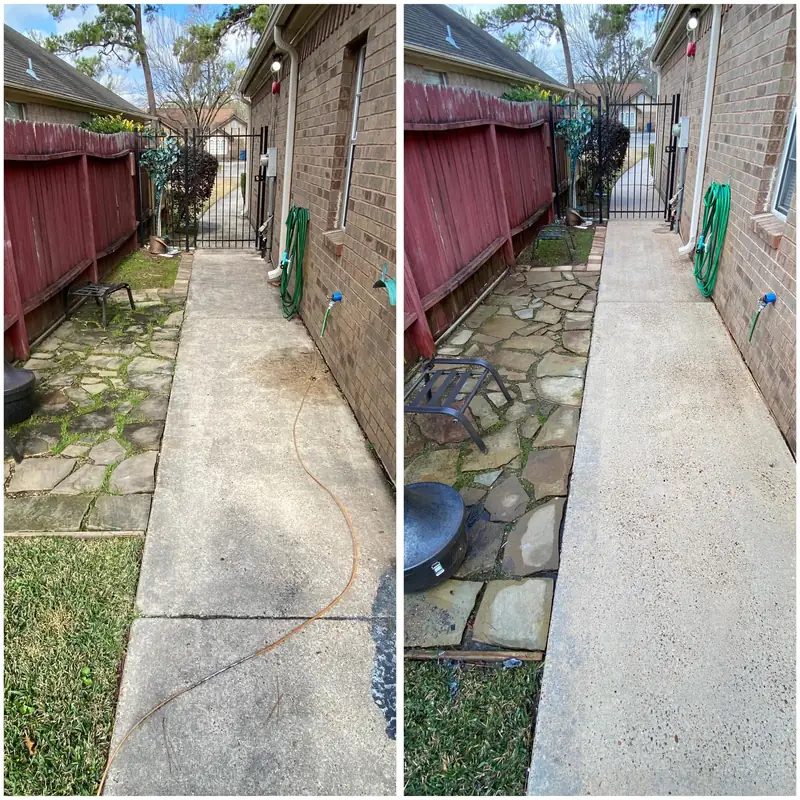
How do you remove rust stains from concrete?
To remove rust stains from concrete, apply an acid-based rust remover, such as an oxalic acid cleaner. Let it dissolve the iron, scrub, then rinse thoroughly.
Rust is iron oxide bonded into the concrete. Pressure washing and bleach do not dissolve it, which is why orange stains survive a normal cleaning. The right product works in minutes.
What causes rust stains on concrete in Humble?
- Sprinkler water with dissolved iron leaves orange arcs on driveways and walls.
- Fertilizer granules containing iron leave orange dots after rain.
- Metal objects, such as furniture feet, planters and tools, leave rings.
How do you remove rust stains step by step?
- Wear gloves and eye protection, and wet nearby plants.
- Test the remover on a small, hidden spot, especially on colored or stamped concrete.
- Apply the remover to the stain and let it sit for the time on the label.
- Scrub with a stiff nylon brush.
- Rinse thoroughly, and repeat on dark stains.
Never mix rust removers with bleach or other cleaners. Mixing chemicals can release harmful gases.
Which rust stains come off completely?
| Stain | Typical result |
|---|---|
| Fertilizer dots | Remove fully in most cases |
| Sprinkler arcs | Remove fully in most cases |
| Years-old metal rings | Lighten a lot; a faint mark can remain |
How do you prevent new rust stains?
- Aim sprinkler heads away from concrete and walls.
- Sweep fertilizer off hard surfaces right after spreading.
- Use an iron filter if your irrigation runs on well water.
- Put plastic feet under metal furniture and planters.
Which rust removers work on concrete?
Oxalic acid cleaners and commercial rust removers made for concrete work best on most rust stains.
| Product type | Best for | Caution |
|---|---|---|
| Oxalic acid cleaner | Light to medium rust | Wear gloves; rinse well |
| Commercial concrete rust remover | Irrigation and fertilizer rust | Follow label dwell time |
| Muriatic acid | Not recommended for DIY | Etches concrete; harsh fumes |
Does pressure washing remove rust?
No. Pressure washing removes dirt and mildew around a rust stain, but the orange iron stain stays.
Rust is a chemical bond with the surface. It needs a product that dissolves iron, followed by a rinse.
How long does rust removal take?
Light fertilizer dots often clear in one treatment of a few minutes. Dark sprinkler bands can need two or three treatments.
Work in the shade or early morning, so the product does not dry on the surface before it has time to work.
Can rust come back after removal?
Yes. Rust returns if the cause continues, such as iron-rich sprinkler water still hitting the concrete.
Rust that bleeds from cracks usually comes from corroding steel inside the slab. That needs a concrete repair, not more cleaning.
Is rust remover safe for pets and plants?
It is safe once rinsed and dried. Keep pets off the area during treatment, and soak nearby plants before and after.
How do you remove oil stains from concrete?
To remove oil stains, blot fresh oil, cover it with an absorbent, then scrub with a concrete degreaser and rinse with hot water.
Cat litter or a commercial absorbent pulls up fresh drips within a day. Older oil soaks deep into the slab. A degreaser and hot water lighten it a lot, but a faint shadow can remain on stains that are years old.
When should you call a professional?
Call a professional when stains cover a large area, keep returning, or sit on colored, stamped or sealed concrete.
Professionals can test products on hidden spots, control dwell time, and recover rinse water so it stays out of the storm drain. They can clean the whole slab afterward so the treated area blends in.
What safety steps matter most with rust removers?
- Wear chemical-resistant gloves and eye protection.
- Keep children and pets away until the area is rinsed and dry.
- Never mix rust remover with bleach or other cleaners.
- Rinse thoroughly and dilute runoff on the lawn, away from storm drains.
How do you clean fertilizer rust right after spreading?
Sweep or blow granules off concrete within minutes of spreading, before rain or sprinklers wet them.
Wet granules release iron into the concrete within hours. Dots that do form are easiest to remove while they are new.
Which other surfaces get rust stains?
Brick, stucco, stone and siding get rust stains too, mostly where sprinklers hit the lower part of the wall.
Brick and stone respond to the same rust removers used on concrete, after a test spot. Stucco and painted surfaces need gentler products, because acid can dull the finish. Vinyl siding rust usually lifts with a mild rust remover made for siding. On every surface, fixing the sprinkler head is what keeps the stain from returning.
Walk your property while the sprinklers run once a season. Note every head that hits a wall, driveway or walkway, then adjust or replace it. That ten-minute check prevents most new rust stains. It saves water too, since overspray on concrete is wasted irrigation. Ask your irrigation company about an iron filter if new orange stains keep appearing even after every head has been adjusted.
Professional rust removal in Humble
For large or stubborn stains, our rust and oil stain removal service treats the stain, then a concrete driveway cleaning evens out the whole slab.
Related questions
Does vinegar remove rust from concrete?
Only very light spots. Vinegar can lighten very light rust spots with time and scrubbing. Dedicated rust removers work faster and more completely.
Will rust remover damage concrete?
No, not when used correctly. Used at label strength and rinsed well, it does not damage sound concrete. Always test colored or sealed concrete first.